Sell The Trend vs Accio
Comparing an all‑in‑one dropshipping platform with a fulfillment automation tool.
Get started for free
Updated on: March 2026
If you're comparing Sell The Trend vs Accio in 2026, the real question is this: do you want a complete dropshipping system to find products, connect suppliers, and automate your store, or do you mainly need an AI-powered sourcing tool to help with supplier and product research? Sell The Trend is built to cover more of the full workflow, while Accio is more focused on sourcing and research assistance.
If you want to test products, manage store operations, and reduce the number of extra tools you need, Sell The Trend covers more of the process in one place. If your main goal is sourcing support and supplier discovery, Accio keeps the focus narrower.
Key Takeaways
-
Sell The Trend is better for sellers who want a more complete dropshipping system with product research, automation, and supplier integration.
-
Accio is better for AI-powered sourcing and supplier discovery, but only if you already have other tools in place for store automation and order fulfillment.
-
Sell The Trend includes product discovery, automation, store integrations, and built-in tools for scaling.
-
Accio focuses more on sourcing support, supplier matching, and AI-assisted research workflows.
-
The better choice depends on whether you want a full dropshipping platform or a sourcing-focused tool.
Sell The Trend vs Accio in 2026: Which One Is Better?
Sell The Trend is stronger for sellers who want to move from product ideas to execution inside one dashboard. It combines AI-powered product research, supplier access, built-in store tools, and automation to reduce guesswork and help users identify winning products faster.
Accio is better suited for users who are more focused on sourcing, supplier vetting, and B2B research. It is built as an AI-powered sourcing engine that helps users find manufacturers, compare options, and analyze costs, which makes it more relevant for importers, brand owners, SMEs, and manufacturers that need deeper procurement support rather than turnkey store operations.
Accio also presents itself as a freemium platform with free search access and paid tiers for more advanced insights.
If your goal is to launch and scale a dropshipping store quickly, Sell The Trend covers more of the workflow in one place. If your priority is verified manufacturers, supplier quality, private labeling, and stronger long-term sourcing decisions, Accio has a clearer edge for that side of the market.
What is the main difference between Sell The Trend and Accio in 2026?
The main difference comes down to workflow control. Sell The Trend helps you find products, import them to your store, connect suppliers, and automate fulfillment from one platform. Accio helps you discover products and suppliers through AI-powered sourcing, but you will still need separate tools to build your store, import listings, and automate orders.
If you want fewer moving parts and less tool stacking, Sell The Trend offers a more complete setup. Accio, by contrast, tends to emphasize sourcing depth, supplier vetting, and procurement research over store execution
Feature |
Sell The Trend |
Accio |
|---|---|---|
Product Database |
Large database with millions of products analyzed using AI, trend data, built-in niche discovery tools, market signals, and handpicked winners. |
AI-powered sourcing engine with a massive database of products, manufacturers, and business insights powered by Alibaba.com. |
Store Builder |
Built-in store builder and integrations for Shopify, eBay, WooCommerce, Wix, Amazon, other popular platforms. |
Not available. Focuses on sourcing and supplier discovery rather than store creation. |
Automation |
Includes product import, automated order fulfillment, and inventory syncing. |
Not built for store automation. You would need separate ecommerce tools to run fulfillment workflows. |
Ad Intelligence |
Built-in tools to find TikTok and Facebook ads linked to products. |
Not positioned as an ad spy or marketing intelligence platform. |
Competitor Research |
Store intelligence tools to analyze competition across stores and product trends. |
Focuses more on supplier discovery, sourcing comparisons, and procurement insights. |
AI Tools |
Uses predictive AI and NEXUS AI product discovery to identify trending products and reduce guesswork. |
Uses AI to match sourcing needs with products, suppliers, and business reports. |
Supplier Integration |
Direct connection to AliExpress and CJ Dropshipping for supplier access and fulfillment. |
Stronger for finding verified manufacturers and supplier options through Alibaba.com-powered sourcing. |
Pricing (Starting Plan) |
Starts at $29.97/month, with higher plans available. |
Freemium model with free search access and paid upgrades for advanced use. |
Free Trial / Free Access |
14-day free trial available. |
Free basic access available. |
What Is Sell The Trend?
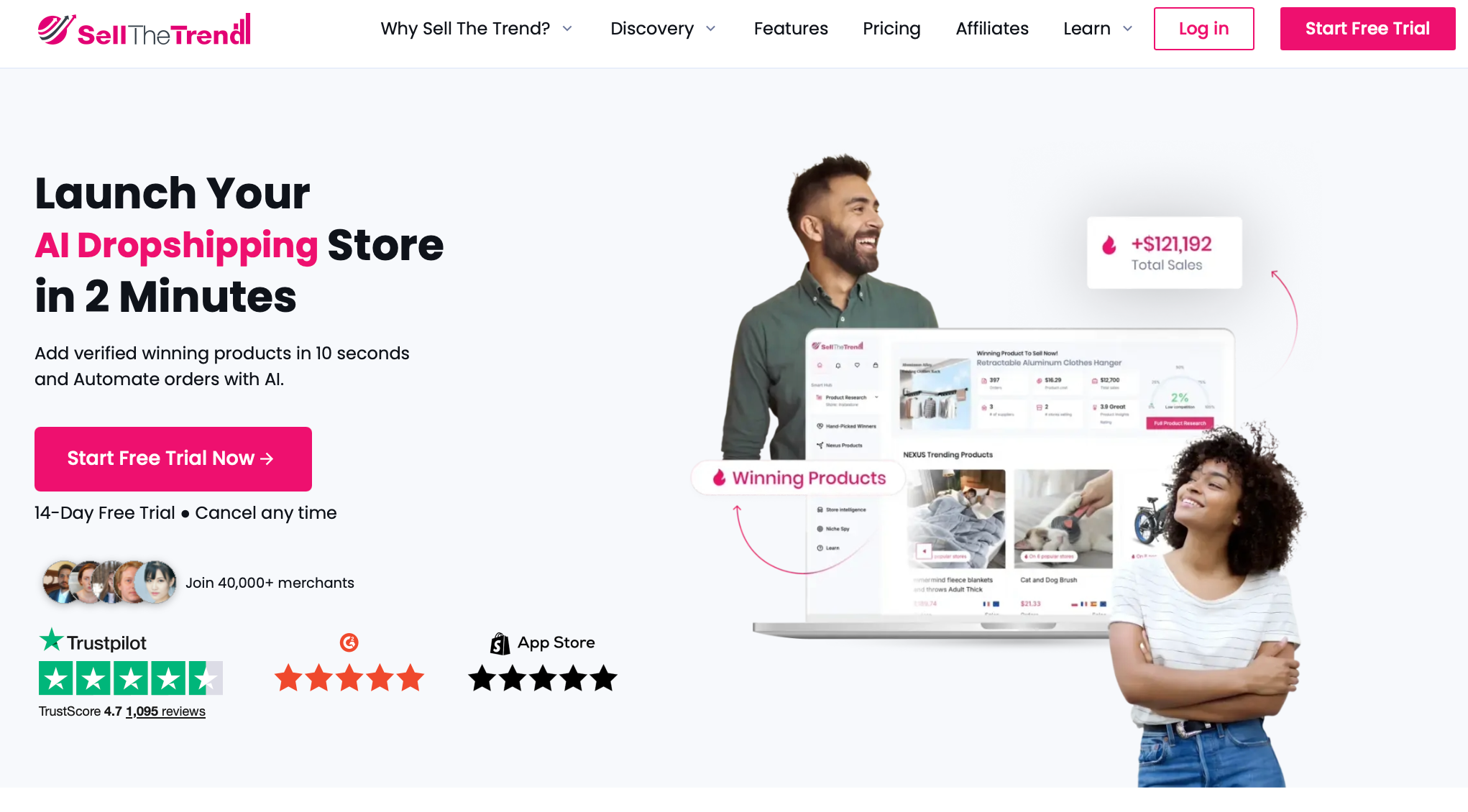
Sell The Trend is designed as a system that helps you find winning products, import them to your store, connect suppliers, and automate orders from one dashboard. This makes it easier to manage your dropshipping workflow without relying on multiple tools. It is built for sellers who want to reduce guesswork and move faster from product research to launch.
Unlike sourcing-focused tools like Accio, Sell The Trend combines AI product discovery, supplier integration, order automation, and store management tools inside one dashboard.
For supplier access, Sell The Trend primarily connects users to AliExpress and CJ Dropshipping, which makes it easier to move from research to fulfillment inside one workflow. It also gives sellers access to trend forecasting, competitor tracking, and built-in ad research, which adds more value for users who want broader e commerce execution rather than only B2B sourcing.
In addition, sellers can create optimized video ads directly inside the platform to test products faster. Sell The Trend also supports integrations beyond Shopify, including, eBay, Amazon, WooCommerce, and Wix, which makes it more useful for sellers across different platforms.
Sell The Trend is designed for both beginners and experienced sellers. Beginners can use it to launch and manage a store from scratch. Experienced sellers can use it to speed up product research, automate tasks, and scale their business more efficiently with one subscription instead of stacking multiple tools.
What features are included in Sell The Trend in 2026?
Functionality |
Included in Sell The Trend |
What You’d Need Separately Without Sell The Trend |
|---|---|---|
AI product research |
Uses NEXUS AI to analyze product trends, demand signals, and growth patterns to help sellers identify winning products faster. It pulls together data from major ecommerce sources so users can make decisions with less guesswork. |
Research-only tools can give product ideas, but they usually do not combine predictive analysis with broader store workflow tools. |
Supplier sourcing |
Built-in access to suppliers through AliExpress and CJ Dropshipping helps sellers find products and source them more easily. |
Separate supplier platforms or sourcing tools are usually needed. |
Store builder |
Includes a built-in store builder plus support for selling workflows across Shopify, WooCommerce, eBay, and other popular platforms |
Shopify or another website platform would need to be used separately. |
Automation |
Supports product import, automated order fulfillment, inventory syncing, and order tracking, which helps cut manual labor and improve speed. |
Tools like AutoDS or DSers are usually needed for automation. |
Ad intelligence |
Includes tools to find Facebook and TikTok ads connected to trending products so sellers can validate demand with real marketing signals. |
Separate ad spy tools are usually required. |
Competitor insights |
Provides Store Intelligence tools to analyze competitor stores, top-selling products, revenue signals, and market activity. |
Chrome extensions or separate research tools are usually needed for competitor analysis. |
Sell The Trend is built to replace several product research tools, automation apps, and store tools with one dashboard. That is a big reason it appeals to beginner and intermediate sellers who want speed, easier execution, and fewer moving parts when launching a store. The platform is also positioned around reducing guesswork by using AI to spot trends, analyze insights, and support better product decisions.
What Is Accio?
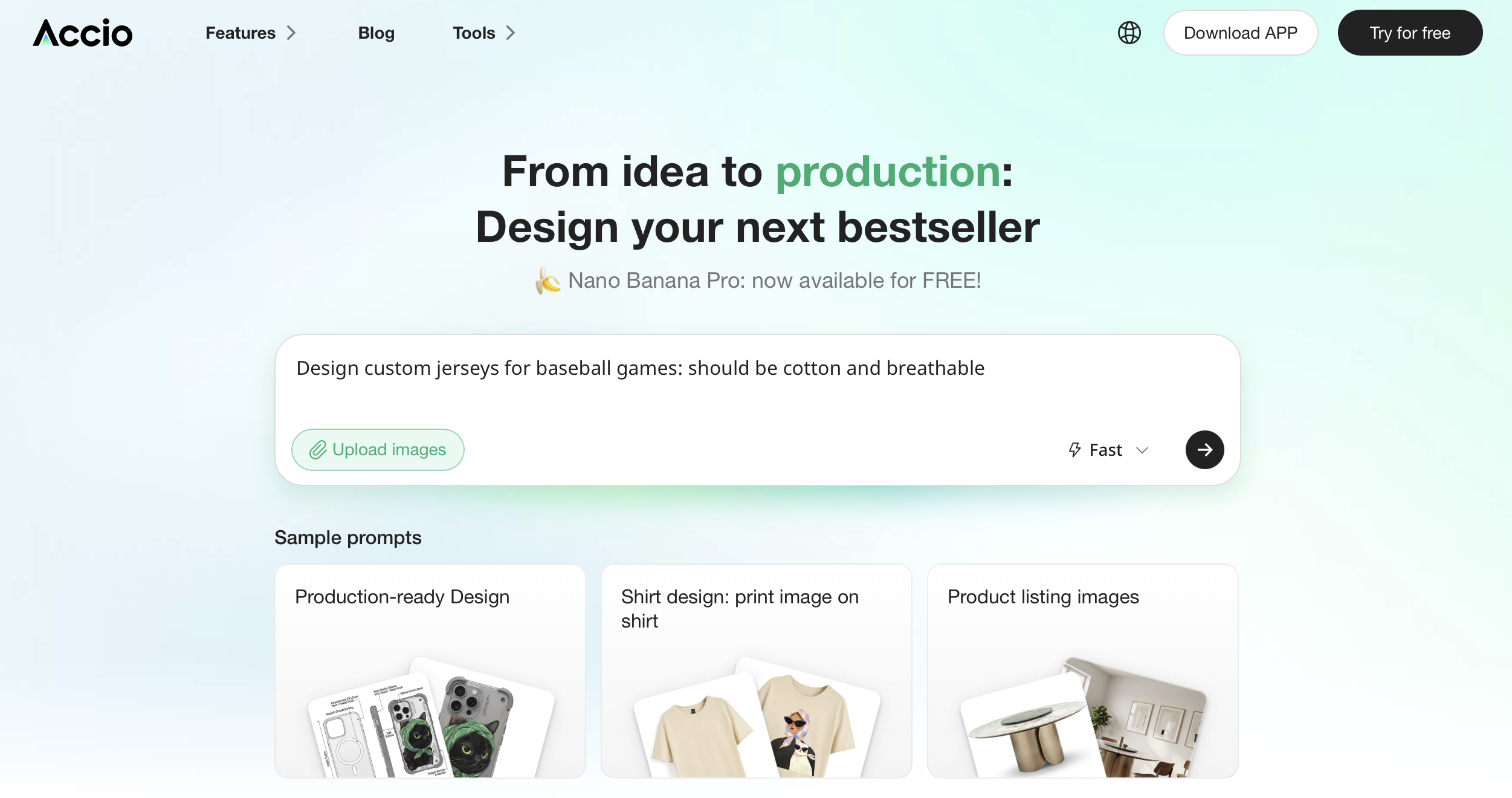
Accio is an AI-powered B2B sourcing engine that helps users find products, manufacturers, and supplier information through one research workflow.
Instead of focusing on store building or dropshipping execution, it is designed more for sourcing, supplier discovery, and procurement support. Accio describes itself as an AI sourcing agent for B2B ecommerce that helps buyers with product discovery, supplier information, consumer insights, market analysis, and business research.
The platform is designed to help users save time. Instead of manually comparing suppliers across different unique websites, users can search sourcing options, review product and supplier information, and gather insights more quickly. This makes it more relevant for importers, brand owners, and businesses that care more about supplier vetting, quality control, and long-term sourcing decisions.
It can be especially useful for businesses sourcing products in categories like beauty, fashion, home goods, and accessories.
Accio focuses mainly on sourcing and supplier research. It is not positioned as a platform for store management, order automation, or fulfillment workflows. Sellers who want to run a full dropshipping operation would still need separate tools for store creation, automation, and product importing.
What features are included in Accio in 2026?
Functionality |
Included in Accio |
Similar tools are needed separately |
|---|---|---|
Product research |
Helps users discover products, suppliers, and sourcing options through an AI-powered research workflow. |
Dropshipping-focused product research tools are still needed for store-ready product validation. |
Supplier discovery |
Built to surface supplier information and manufacturer options for B2B buyers. |
Separate supplier platforms or sourcing services may still be needed depending on the workflow. |
AI sourcing assistance |
Uses AI to turn sourcing requests into faster, more structured research. |
Manual sourcing research would otherwise take more time across multiple websites. |
Product comparison |
Supports comparison of products, supplier information, and market research inside one workflow. |
Spreadsheet-based comparison or manual supplier review would usually be needed. |
Automation |
Not included. Accio is not built for order fulfillment or inventory syncing. |
Tools like AutoDS or DSers are required for automation. |
Store builder |
Not included. Accio is not designed for storefront creation or store management. |
Shopify, WooCommerce, Wix, or other ecommerce platforms are needed separately. |
Ad intelligence |
Not positioned as an ad spy or social ad research platform. |
Separate ad research tools are needed for marketing insights. |
Competitor insights |
Focuses more on sourcing-side information than on competitor store tracking. |
Store spy tools are needed for deeper competitor analysis. |
Sell The Trend vs Accio: How does their pricing compare in 2026?
Platform |
Entry Plan |
Mid Plan |
High Plan |
Free Plan / Trial |
|---|---|---|---|---|
Sell The Trend |
$29.97/month |
$49.97/month |
$99.97/month |
14-day free trial available |
Accio |
Free basic access available |
Paid tiers for advanced insights |
Custom / higher-tier access may apply |
Free basic access included |
At first glance, Accio may look cheaper because it offers free basic access. But the pricing comparison becomes different when you look at the full ecommerce workflow. Sell The Trend uses a subscription model with a 14-day trial and combines product research, supplier access, store tools, and automation in one dashboard.
Accio operates more like an AI-powered B2B sourcing engine. It is useful for supplier vetting, competitive pricing, profit margins, and deeper sourcing insights, especially for importers, manufacturers, and private-label businesses. But it is not built as a complete store-running system, so users may still need extra tools like Shopify, fulfillment software, and ad research platforms.
If you only need sourcing support, Accio’s lower barrier to entry can make sense. If you want a faster path from product ideas to launch, Sell The Trend offers more built-in value because it replaces multiple tools with one subscription. That matters for sellers who want to reduce guesswork, improve speed, and avoid stacking software as they scale.
Total Cost of Ownership: What Accio Really Costs When You Add Everything?
Accio focuses mainly on sourcing, supplier discovery, and procurement-side research. The reality is that sourcing support alone is not enough if you also need store creation, automation, and marketing workflows.
It offers a free plan to get started, but it does not position itself as a platform for store building, order fulfillment, ad intelligence, or inventory syncing. That means sellers who want to move from product ideas to a fully operational dropshipping business will still need extra tools for store setup, automation, and marketing.
Here’s a side-by-side breakdown of what Sell The Trend includes out of the box — and what you would typically need to add separately when using Accio for a store-based workflow.
Requirement |
Sell The Trend ($49.97) |
Accio |
|---|---|---|
Product Research |
Included |
Included for AI-powered sourcing and supplier discovery |
Store Builder |
Included (SellShop + integrations with Shopify, WooCommerce, eBay, and others) |
+$39/month (Shopify required) |
Order Automation |
Included (product import, fulfillment, inventory sync) |
+$26.90/month (AutoDS or similar) |
Supplier Integration |
Included (AliExpress, CJ Dropshipping, and more) |
Manual supplier follow-up and separate workflow setup required |
Ad Intelligence |
Included ad spying tools |
Requires separate ad research tool |
Competitor Research |
Included (store intelligence tools) |
Limited; requires separate competitor research tools |
Total Estimated Cost |
$49.97/month (all core tools included) |
$117.90+ /month - not including Accio subscription price |
Sell The Trend’s Essential plan is listed at $49.97/month and includes NEXUS AI product discovery, daily handpicked winners, Facebook winning ads finder, one connected store, automated order fulfillment, and product imports. Shopify’s official pricing page confirms that the Basic plan starts at $39/month.
Accio’s official site says it offers a free plan with optional upgrades for advanced AI sourcing features, but it does not clearly present public self-serve pricing in the same storefront-style format.
So the key difference is not just entry price. It is how many extra tools you need after that. If you only want sourcing research, Accio can be useful. If you want a more complete ecommerce workflow with product research, store tools, and built-in execution, Sell The Trend can deliver more value in one subscription.
What Are the Best Alternatives to Sell The Trend and Accio in 2026?
If Sell The Trend or Accio does not fully match your workflow, several specialized tools support different parts of the dropshipping process.
Most of these platforms focus on one specific function, such as product research, supplier sourcing, advertising intelligence, or fulfillment. That can be useful, but it also means many sellers end up stacking multiple subscriptions to cover the full workflow.
Using multiple data sources to validate product demand can reduce guesswork, improve trends analysis, and help sellers spot better opportunities before they peak.
Below are some of the most popular alternatives and what each platform does best.
1. CJ Dropshipping — Supplier Sourcing and Fulfillment
CJ Dropshipping is both a supplier platform and fulfillment service. It offers global warehouses, sourcing agent services, custom packaging, and quality control support, which makes it useful for sellers who care about shipping speed, availability, and supplier quality.
Key features include:
Automated order fulfillment and tracking
Product sourcing requests and supplier matching
Custom packaging and branding options
Built-in quality control services
CJ Dropshipping integrates with ecommerce platforms and works well for sellers who already know what they want to sell. But it is not built as a trend spotting or ad intelligence platform, so sellers still need separate product research tools to identify winning products.
2. Koala Inspector — Competitor Store Analysis
Koala Inspector is a Chrome extension built for analyzing Shopify stores and the competitive landscape. It is useful for sellers who want to watch competitors, study store themes and apps, and gather insights into what other stores are doing.
Key features include:
Visibility into best-selling products
Insights into store themes and installed apps
Traffic sources and advertising activity
Estimated store performance metrics
Competitor analysis matters because it helps sellers understand product positioning, customer pain points, and the kinds of offers that are already working in the market.
3. Dropship Spy — Trending Product Discovery
Dropship Spy focuses on finding trending products using AI tools, Facebook ad tracking, and Instagram influencer data. It is useful for sellers who want product recommendations, campaign examples, and faster access to product ideas that already show traction.
Key features include:
Trending products from social platforms
Influencer and ad campaign insights
Ready-to-use ad copy templates
Engagement and performance data
This kind of tool is helpful when speed matters and you want to validate whether a product is already getting attention before you test it.
4. Minea — Advertising Intelligence
Minea is a specialized ad spy platform built around Facebook, TikTok, and other social ad data. It is one of the stronger options for sellers who want marketing insights, examples of winning creatives, and a clearer view of what ads are driving sales.
Key features include:
Ad tracking across major social platforms
Engagement and performance metrics
Filtering by region, duration, and ad type
Product and campaign analysis based on real ad data
Tools like Minea are especially useful when you want to validate demand through actual ad activity instead of guessing.
5. Spocket — Verified US and EU Suppliers
Spocket is a supplier marketplace focused on US and EU sourcing. It is useful for sellers who want faster shipping, better reliability, branded invoicing, and easier access to vetted suppliers for specific product categories.
Key features include:
Access to top-rated US and EU suppliers
Faster shipping than many overseas sourcing options
Branded invoicing and order management
One-click product imports and tracking
Spocket is a good fit for sellers who want stronger supplier quality and a better customer experience, especially when delivery speed affects conversions and repeat purchases.
6. HyperSKU — Scaling and Global Fulfillment
HyperSKU is a sourcing and fulfillment platform designed for scaling. Its main advantage is flexibility: it offers fulfillment support without a monthly subscription fee, which can improve accessibility for sellers who want to control overhead.
Key features include:
Dedicated sourcing and fulfillment support
Fast shipping and global logistics
Supplier matching and order processing
No monthly subscription fee
This model can be attractive for sellers who want custom sourcing support without committing to another fixed software cost.
7. ZIK Analytics — Marketplace Demand Validation
ZIK Analytics is built for sellers who want to validate demand using marketplace data from platforms like eBay, Shopify, and AliExpress. It is useful for trends analysis, sales tracking, and analyzing insights before a product reaches its peak.
It provides insights into:
Real transaction and sales patterns
Buyer behavior and demand shifts
Pricing and competition analysis
Market signals and trend reports
Marketplace data can help sellers avoid weak product picks and validate demand with stronger evidence.
8. Niche Scraper — Data-Driven Product Research
Niche Scraper is a product research tool built for sellers who want to find winning products by scraping Shopify stores and AliExpress data. It combines store spying, ad examples, and hand-picked recommendations in one workflow.
Key features include:
Product scraping across Shopify stores and AliExpress
Competitor store analysis and product tracking
Hand-picked product recommendations
Built-in ad examples and video creation tools
Niche Scraper is useful for sellers who want a balance between automation and manual research. It helps users validate product ideas with real store data, which can reduce the chances of missing trends or launching products with weak demand.
Feature Breakdown: How do Sell The Trend and Accio compare?
Below is a detailed, fact-based comparison of each platform’s core features as of 2026.
1. What are the product research capabilities of each tool?
Sell The Trend uses an AI-powered engine called NEXUS AI to analyze product performance across marketplaces and advertising channels. It is built to help sellers reduce guesswork by spotting trends, analyzing competitors, and identifying winning products faster. Sell The Trend also describes its platform as a system that combines predictive product research, supplier access, automation, and store tools in one dashboard.
Its product research workflow is designed around trend forecasting, performance signals, and product validation. It also uses chart data sourced from multiple ecommerce channels, supplier activity, and marketplace signals to help sellers validate demand more accurately
The platform highlights market signals, growth patterns, and product opportunities so sellers can make better decisions before demand peaks. It also pulls together data from major ecommerce sources rather than relying on one single source.
Predictive trend scoring based on engagement and growth signals
Access to a large product database with filters and performance indicators
Built-in analytics tools that help sellers analyze insights and avoid weak product choices
Handpicked winners and AI-supported product recommendations
Accio takes a different approach. It is built more for B2B sourcing research than for fast-turnover dropshipping product hunting. Its AI engine helps users search products, compare suppliers, and review business insights, which makes it more useful for supplier vetting, custom sourcing, and manufacturer discovery than for storefront-ready product testing.
Verdict: If you want AI-backed trend spotting, deeper ecommerce product validation, and faster ways to identify winning products, Sell The Trend gives you more data and more execution-focused research. If you want sourcing-side research, manufacturer discovery, and stronger B2B procurement support, Accio is better aligned with that workflow.
2. How do their product databases and filters compare?
Sell The Trend offers a broader product discovery setup for dropshippers. Its database is built around trend analysis, supplier availability, product movement, and curated winners, which helps users filter products based on growth potential instead of only static listings. That gives smaller sellers an edge in a market where larger brands often have dedicated teams for trend spotting and product selection.
Filter products based on trend strength, engagement, and fulfillment reliability
Built-in analytics to evaluate supplier availability and performance
Continuous updates based on changing market signals
Curated product ideas supported by predictive scoring
Accio’s database is powerful in a different way. It leverages Alibaba.com-powered sourcing data and is geared more toward manufacturers, wholesalers, and sourcing comparisons. That makes it strong for users who need supplier vetting, cost visibility, and better margin planning across specific product categories.
Verdict: Sell The Trend offers broader discovery and stronger dropshipping-oriented filters. Accio is stronger for deep B2B sourcing research, supplier comparisons, and procurement-focused data.
3. Which platform supports store creation and automation?
Sell The Trend is much stronger here. It includes built-in store creation, product imports, and fulfillment workflows, and it supports Shopify, TikTok Shop, eBay, Amazon, Wix, and WooCommerce integrations. It is designed for sellers who want to move from research to launch without patching together extra tools.
It also supports automated order fulfillment, inventory syncing, and store execution features that reduce manual work. For sellers who care about speed, ease, and fewer moving parts, that all-in-one structure adds real value. Sell The Trend also offers an integrated brand builder for sellers who want to create a stronger store identity inside the same workflow.
Supports automated product imports and order fulfillment
Helps reduce manual workload and improve store speed
Direct integration with major store platforms
Includes store creation and brand support in one dashboard
Accio does not position itself as a store builder or fulfillment platform. Users can use it to research sourcing options and compare suppliers, but they still need separate ecommerce tools for storefront creation, automation, and live store management.
Verdict: Sell The Trend provides full store creation and automation support. Accio focuses on sourcing research rather than storefront operations.
4. How do they use AI and predictive analytics?
Sell The Trend uses predictive AI to support product research, trends analysis, and product scoring. It is designed to function like a fast research engine for ecommerce sellers by scanning market data and helping them move from product ideas to launch decisions with less guessing. That is one reason it is often positioned as a strong fit for beginner to intermediate dropshippers who want faster execution.
Accio uses AI differently. Its strength is in conversation-style sourcing research, supplier discovery, and procurement analysis. It acts more like an AI sourcing assistant than a direct product launch engine, which makes it valuable for businesses that want to compare factories, review business reports, and plan custom production more carefully.
Verdict: Sell The Trend offers stronger predictive AI for product research and store growth. Accio uses AI more for B2B sourcing, supplier vetting, and structured procurement support.
5. Which tool is stronger for competitor analysis?
Sell The Trend includes Store Intelligence, which is built for analyzing competitors, store performance, product movement, and the broader competitive landscape. That gives sellers a clearer view of what other stores are doing and where opportunities may exist. It is a strong fit for users who want more than just product ideas and need deeper competition research as part of their workflow.
Track competitor stores and product movement
View product listings and store-level signals
Analyze positioning, pricing, and winning patterns
Use competitive data to validate what to test next
Accio is less focused on storefront competitor tracking. Its insights are more sourcing-oriented, centered on suppliers, product sourcing options, and procurement comparisons rather than Shopify-style store intelligence.
Verdict: Sell The Trend offers deeper competitor analysis for ecommerce sellers. Accio is more useful for supplier-side research than for monitoring competitors’ stores.
6. What kind of ad intelligence and marketing insights are included?
Sell The Trend includes built-in ad intelligence, which is one of its biggest advantages over sourcing-focused platforms. Sellers can research TikTok ads and Facebook ads connected to products, making it easier to validate demand, study examples, and understand what is driving sales. This is especially useful for sellers who want both product research and marketing tools in one system.
It also helps sellers study more impactful ad angles before they spend money testing campaigns.
These ad features help users analyze engagement, study what types of videos and creatives are working, and watch how products are being promoted across social platforms. For beginners, that adds accessibility. For experienced sellers, it adds speed and sharper validation before spending on traffic.
Accio does not position itself as an ad spy or campaign analysis platform. It is built around sourcing and supplier workflows, so users who need deeper advertising insights would still need separate marketing tools.
Verdict: Sell The Trend provides stronger ad intelligence and more complete marketing support. Accio is not designed for ad spying or campaign validation.
7. Do they support supplier integration and sourcing?
Sell The Trend connects directly with sourcing channels such as AliExpress and CJ Dropshipping, which makes supplier access easier inside the same platform. It also supports verified US/EU shipping options, which can matter for delivery speed, customer experience, and long-term store quality.
Direct supplier integration for easier sourcing
Filtering based on shipping speed and reliability
Better visibility into fulfillment options
Useful for sellers who want fast execution, not just sourcing research
Accio is stronger for deeper B2B sourcing and manufacturer discovery. It is geared more toward users who want to verify factories, compare supplier quality, and focus on custom production or private labeling. That makes it appealing for importers and brand owners, but it is less turnkey for dropshippers who want built-in supplier access tied directly to store operations.
Verdict: Sell The Trend offers easier built-in supplier access for dropshipping workflows. Accio is stronger for long-term manufacturer research, supplier vetting, and B2B sourcing depth
Conclusion
Choose Sell The Trend if you want a broader system that helps you find products, connect suppliers, automate orders, and launch faster from one dashboard. It combines features like AI-powered product research, store automation, ad research, supplier access, and store creation in one platform, which can reduce tool stacking and simplify scaling.
Sell The Trend’s official site highlights NEXUS product research, store automation, TikTok and Facebook ad tools, multiple sales-channel integrations, and a 14-day free trial.
Choose Accio if your main goal is sourcing, supplier vetting, and B2B-style manufacturer research. It is the better fit for businesses that care more about procurement depth, private labeling, and long-term sourcing decisions than full dropshipping execution.

Inspected by Rachid “Rush” Wehbi
Founder of Sell The Trend, Rush is a data-driven entrepreneur with over 10 years of experience in e-commerce, automation, and product discovery. Each article is reviewed to ensure it reflects real-world workflows, industry insights, and platform-level accuracy.
Frequently asked questions
What is the main difference between Accio and Sell The Trend?
Sell The Trend is built for a broader dropshipping workflow that includes product research, store setup, automation, supplier access, and marketing tools.
Accio is more focused on AI-powered sourcing, supplier discovery, and procurement-style research.
Is Accio good for dropshipping?
Accio can be useful for dropshippers who mainly want help with sourcing, supplier discovery, and manufacturer research.
However, it is better suited to users who already have other tools in place for store building, automation, and fulfillment.
Is Sell The Trend worth it for beginners?
Sell The Trend is widely recognized as a legitimate AI-powered dropshipping tool, and it has positive customer feedback, visible ratings, and reviews across sources like Trustpilot, its Shopify app presence, and its own user
success stories.
It is especially useful for sellers who want product research, supplier access, automation, and store tools in one place instead of stacking multiple subscriptions.
That can create a smoother path to faster launch execution and long-term success.
Which is better for supplier research, Accio or Sell The Trend?
Accio is stronger if your main priority is AI-powered supplier discovery and sourcing research.
Sell The Trend is better if you want supplier access as part of a larger dropshipping workflow rather than as a standalone sourcing function.
Which is better for running a full dropshipping workflow?
Sell The Trend is the better fit for running a full dropshipping workflow because it combines product research, store tools, automation, supplier access, and marketing features in one system.
Accio is more specialized around sourcing and procurement research.
Can Sell The Trend replace multiple dropshipping tools?
In many cases, yes.
Sell The Trend combines AI product research, store automation, supplier access, and ad research in one dashboard, which can reduce the need for separate subscriptions.
Its own customer examples also include a fashion-store
case study
and multiple user stories showing lower tool costs and faster execution after consolidating their workflow.